On Large Canvases
A painter once told me she never begins with the large canvas. She sketches, studies, steps away, and only later commits to scale. A novel, I’ve realized, demands the same patience.
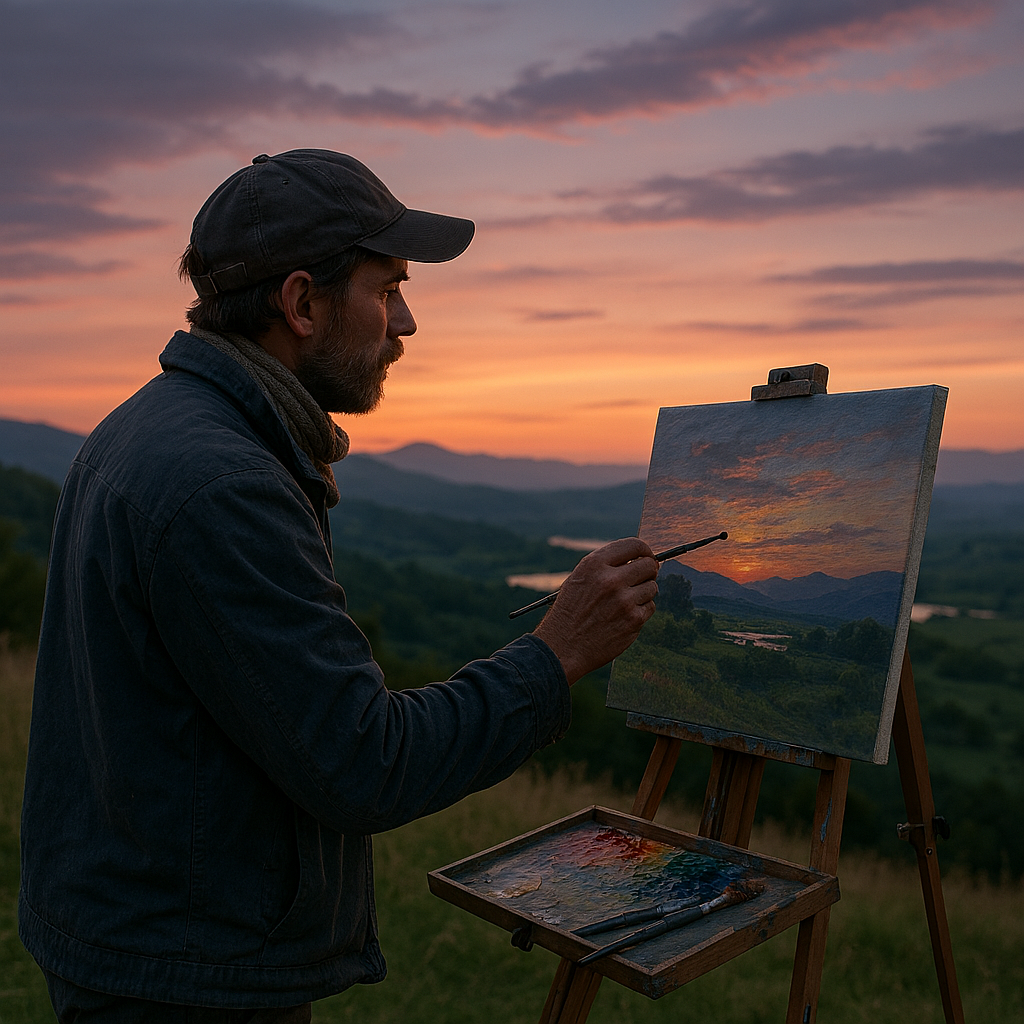
A few weeks ago, I met a painter at a gallery I was visiting, and we fell into one of those unexpectedly absorbing conversations about process.
She described how she approaches a new landscape.
First, she goes to the location she wants to paint. She sketches. She does small open-air studies. Quick impressions. Colour notes. Light and shadow.
Before she leaves, she takes dozens of photographs.
Back in her studio, she paints small sections of the landscape. She'll paint a stand of trees, a curve of shoreline, a particular shift in the sky, just to make sure she truly knows them. Not just visually, but spatially. Structurally.
Then she stops.
She works on something else.
She lets her mind move away from the scene entirely.
Only after that period of distance, when her brain has quietly sorted composition, colour, and proportion, does she begin the large canvas.
And her canvases are large.
Listening to her, I was struck by how familiar the process felt.
A novel is a large canvas for words.
When I introduce a new character, I don’t always know them completely at first. I might write a short piece of backstory to understand their motivations, their history, their private logic. It may never appear in the finished manuscript, but it deepens the structure beneath it.
Like her small studies of trees and shoreline, these smaller explorations allow me to understand the landscape before committing to the full composition.
And like the painter, I rely on distance.
I often draft one manuscript while outlining another. When the second draft is complete, I return to the first for structural edits while beginning the third. This staggered rhythm gives my mind time to percolate through plot problems, character motivations, and thematic threads.
The distance is not about delay or procrastination.
It is incubation.
When I return to a manuscript after weeks or months away, I see the composition more clearly. The imbalance stands out. The shadows are too heavy. The pacing is off. Or sometimes, if I'm lucky, it holds.
The large canvas demands perspective.
It is tempting, in writing, to believe that productivity is linear: draft, revise, publish. But art, whether painted or written, often requires movement in and out, close and far, immersion and retreat.
The painter knew this.
And I am learning it, one manuscript at a time.