Handwriting, Typing and the Writer's Brain
Writers spend a lot of time worrying about the right words. But recently I started wondering about something else: does the way we write change how we think?
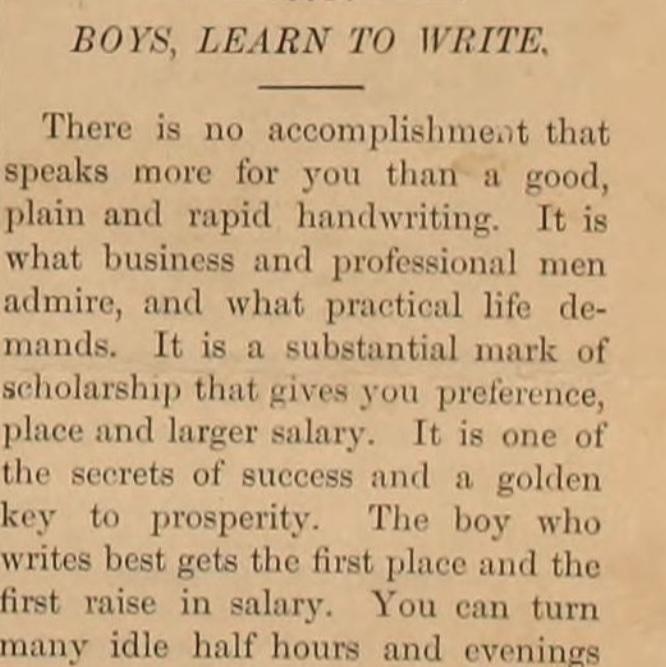
I cannot be the only person who has stumbled across a spate of recent articles claiming that the decline of handwriting is leading to a decline in higher-order brain functions. I’ve read a few of them, and I admit I felt a little smug. I grew up in an era where handwriting was still taught in school, and I still do a fair bit of it every day. My journals are handwritten. My grocery lists are handwritten. If there’s a scrap of paper nearby, chances are I’m scribbling on it.
But most of my fiction writing happens while staring at a computer screen, and a thought crept in: perhaps different modalities of writing produce different results. If handwriting engages the brain differently than typing, could that translate into better storytelling?
Down the research rabbit hole I went.
One interesting thread I discovered was that the physical feedback involved in writing matters more than we might think. Studies suggest that any kind of haptic friction, the tactile resistance of pen on paper or the click of mechanical keyboard keys, engages the brain differently than smooth, silent input.
And then there is the mountain of research on handwriting itself.
Several studies on note-taking and learning have found that handwriting engages more areas of the brain than typing, particularly those involved in memory and comprehension. These studies posit that the slower speed of handwriting versus touch typing is a feature, not a bug, allowing your brain to process and be selective about the words you write down.
Thinking about the muscle fatigue and calluses involved in handwriting as a negative, I stumbled upon some research about the Palmer Method of penmanship, widely taught in the late nineteenth and early twentieth centuries, was specifically designed to reduce muscle fatigue. According to some sources, it could even cause less fatigue than typing.
Naturally, I had no idea what the Palmer Method actually was, so I looked it up.
Which led me into an entirely different rabbit hole: the world of historical business penmanship. The Palmer Method wasn’t created for artists or calligraphers. It was designed for offices. Clerks, bookkeepers, and secretaries needed a style of writing that was fast, legible, and consistent.
For decades, business schools didn’t just teach accounting and correspondence. They taught penmanship. Not how to format a letter, but how to write it beautifully and efficiently. Business magazines included entire sections devoted to handwriting. I cannot imagine opening a modern issue of Fortune and finding even a two-page spread dedicated to penmanship, much less the five or six pages that magazines of a century ago routinely ran.
There were even entire publications devoted to the subject, with names like The American Penman, The Penman’s Art Journal, and The Western Penman.

A person’s signature was taken just as seriously. Business magazines ran advertisements and classifieds offering to send customers sample signatures in a dozen different handwriting styles so they could choose one that best represented them. Once selected, the customer was expected to practice it until the monogram was perfected.
One article I read went so far as to claim that good business handwriting was more valuable than a degree from Harvard Business School.
Today, many students entering Harvard Business School cannot even decipher a handwritten note.
As it turns out, I was likely taught some variation of the Palmer system in school, which gives me a small but satisfying sense of superiority. It’s always good to have a bit of that when working in a field where self-doubt is practically part of the job description.
So this summer, I’m going to experiment.
In an attempt to re-engage any higher-order cognitive functions that might have been dulled by years of typing, I’ve decided to try writing my fiction longhand first. Ideally outdoors, in a deck chair, in a journal. Palmer method be damned.
At the end of the day, I’ll transcribe what I’ve written into my computer.
Whatever this experiment costs me in daily word-count productivity, I’m hoping it pays back in better prose.
Or at least better handwriting.